
The Future of Digital Identity Meet Onairos

· 2 min read
DcodeBlock
Contributor

An Introduction to the Future

Imagine a world where your online experience is truly yours.
A world where your data isn’t scattered across the internet, being sold to advertisers or used to manipulate your screen time.
Instead, it works for you—making you smarter, wealthier, more efficient, and even boosting your social life! 🎯💡💰

Sounds too good to be true?
Enter Onairos—your key to unlocking the future of digital intelligence and sovereignty.


💡 What is Onairos?

Onairos is an innovative AI-powered platform that unifies your online data into a Digital Persona—a highly intelligent extension of yourself that interacts with the digital world while keeping you in control. 🤖

Right now, your data is everywhere—monetized without your consent, shaping algorithms designed to increase your screen time instead of enriching your life.
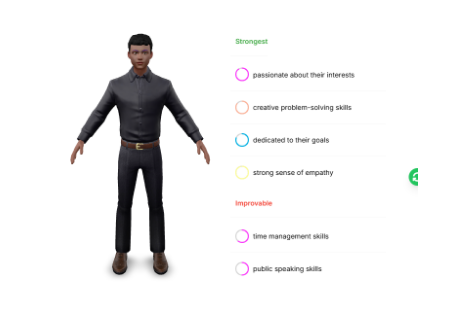
Data Scattered Everywhere

Onairos changes the game.
It gives you back data sovereignty, rewards you for your digital presence, and enhances your online experiences like never before.
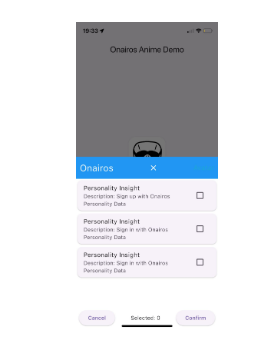
Rewards & Sovereignty

With 2 clicks, you can seamlessly connect your Preferences to any app in our ecosystem, to help them understand more about you and improve your experience!
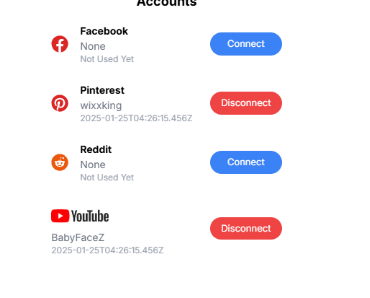
2 Clicks Integration


On the other side, we want to reward developers who respect user privacy, and deliver new and unique user experiences.

We allow these developers to access powerful user data and insights—the kind that makes Instagram and TikTok billions:

  • Personalized recommendations
  • Personal AI tools
  • Tailored learning
  • Personality-based social and dating matchmaking
  • And more

We’re excited to work with DCodeBlock to enable a personal and enhanced web3 learning experience, and want to support you too if you’re building a consumer app.

🚀 Our 1-line SDK to get started:

<Onairos webpageName="DCodeBlock"  requestData={requestData} onComplete={onComplete} inferenceData={data} proofMode={false} />

Blockchain & Web3. LayerZero v2 Protocol Architecture. Part 1

· 4 min read
DcodeBlock
Contributor

LayerZero is an immutable, censorship-resistant, and permissionless protocol that allows any blockchain user to send, verify, and execute messages on a supported destination network.

The documentation says that, but what that means is hard to understand. LayerZero is NOT a separate blockchain or a bridge between them. Moreover, as Brian Pellegrino (CEO of LayerZero Labs) states, it is not a standard for exchanging messages between blockchains but a protocol for transferring data (which is transmitted as messages). In addition to exchanging data, the protocol provides the infrastructure for executing and verifying this data in transit.

Globally, the protocol offers its vision of a decentralized solution to the problem of blockchain interoperability. It emphasizes extensibility, flexibility in security settings, and separation of data verification and execution functionality, distinguishing it from other solutions. The second version of the protocol positions itself as an omnichannel solution (Omnichain Messaging Protocol—OMP).

Interoperability is the ability of a product or system with completely open interfaces to interact and function with other products or systems without restrictions on access and implementation.

In short, cross-chain is about the interaction of two different blockchains via bridges; multichain implies the deployment of a specific DApp in other blockchains, which also includes modular blockchains; omnichain is the creation of a base layer (Layer 0) on top of which various blockchains and DApps can be located. The advantage of omnichain solutions is the universal logic of message transmission and flexible security settings for each network.

Cross-chain (left): Networks are connected via separate bridges between chains. The critical point is that each link must be configured individually, and interactions between different compatibility groups (e.g., “Compatibility Group A” and “Compatibility Group B”) require additional layers of security and integrations. These are essentially disjointed connections between chains, which increases the complexity of managing connections and security.

Omnichain (right): In this approach, each chain can directly interact with any other in the network via unified network semantics. In LayerZero, each link between chains is unified, but the security for each link can be configured individually.

LayerZero Principles

The OMP (Omnichain Messaging Protocol) is based on two main principles: security and universal semantics.

How to Bridge to EDU Chain Mainnet

· 3 min read
DcodeBlock
Contributor

EDULand NFTs are now live! Head to dashboard.educhain.xyz/eduland to start renting today.

As an EDULand NFT holder, you’ll gain the right to operate EDU Chain nodes and earn $EDU rewards.

A pool of 150 million EDU rewards awaits EDULand NFT holders who verify transactions on EDU Chain.

Read on to learn more about EDULand NFTs and how to operate an EDU Chain node.

How does renting EDULand NFTs work?

To rent an EDULand NFT, users pay an initial rental fee in Yuzu Points based on a bonding curve.

Users select their rental duration and must pay both the initial rental fee and all maintenance costs upfront.

For instance, a 60 day rental requires payment of the initial rental fee plus 60 days of maintenance.

Initial rental fees start at 3000 Yuzu and the maintenance cost per node, per month is 40 Yuzu.

EDULand NFTs are non-transferable and managed through a smart contract for security.